Jesus Died for Love: A Designer’s Embroidery Review
First Impressions and Visual Weight
When evaluating Jesus Died for Love for a new collection, my first focus is always on the emotional resonance and structural integrity of the artwork. As a designer who has digitized and stitched countless faith-based graphics, I look for a balance between reverence and wearability. This design carries a profound message, but from a production standpoint, its success depends entirely on how well the typography and iconography translate into thread. The visual personality here feels solemn yet hopeful, making it a strong candidate for meaningful custom apparel rather than fast fashion.
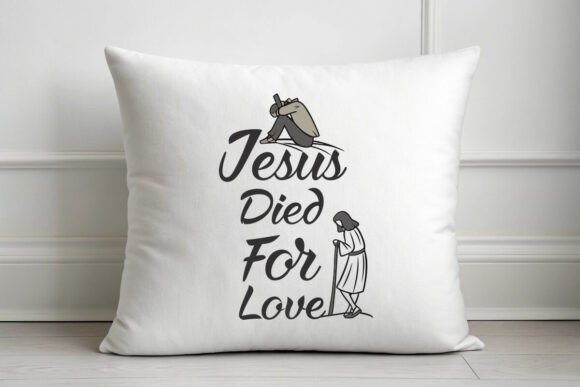
The layout suggests a centered composition that demands respect. Unlike trendy, distressed graphics that hide imperfections, this message requires clarity. When I review T-Shirt Designs with religious themes, I am looking for clean lines that won't get lost in the fabric texture. The vector format mentioned in the product description is a significant advantage here. It implies that the curves are mathematically smooth, which is essential when converting to a machine embroidery design. Jagged vectors result in jagged stitches, so having a clean source file gives me confidence that the final embroidered patch or chest logo will look professional and intentional.
Real-World Application: Stitching a Ministry Sweatshirt
To truly judge this asset, I mentally placed it in a specific scenario: creating a unisex crewneck sweatshirt for a church volunteer team or a boutique faith-based brand. This is a classic use case for sweatshirt embroidery, where the fabric is thick, fuzzy, and prone to swallowing fine details. In this context, Jesus Died for Love needs to hold its own against the fleece texture.
If I were preparing this for a client, I would immediately assess the lettering height. For a sweatshirt, the text needs to be bold enough to remain legible from a conversational distance. If the original graphic uses a thin serif font, I would utilize the editable vector files to slightly thicken the strokes before digitizing. This ensures the satin stitch columns have enough width to anchor properly without tunneling. The mood of the design fits perfectly on a neutral-toned sweatshirt—think sand, olive, or charcoal—where the contrast allows the message to stand out without shouting. This application transforms a simple garment into a personalized gift or a uniform piece that fosters community identity.
Fabric Considerations and Stabilizer Strategy
While this design shines on stable knits, caution is required for other mediums. If you are adapting Jesus Died for Love for a lightweight summer tee or a baby onesie, the stitch density becomes a critical variable. Heavy fill areas on thin cotton can cause puckering or even tear the fabric. In these instances, I recommend testing a lighter density version or using a cutaway stabilizer that remains permanently to support the stitch structure.
For tote bag design projects, specifically on canvas, this graphic performs exceptionally well. Canvas provides a firm foundation that mimics the stability of embroidery backing, allowing for crisp corners and smooth curves. However, if you plan to use this on a curved surface like a cap, verify that the aspect ratio works within the limited vertical space of a hat frame. You may need to stack the text elements differently than they appear in the standard PNG preview to accommodate the curve without distorting the message.
Technical Performance and Digitizing Notes
As an experienced reviewer, I must emphasize that owning the vector and SVG files does not automatically guarantee a perfect stitch-out. These are design assets, not necessarily pre-digitized embroidery files. Before listing any finished product in your Etsy shop or handing over a commission, you must validate the technical translation.
- Check Small Details: Inspect the vector nodes. Are there tiny serifs or decorative flourishes smaller than 1mm? These often fail in embroidery. Simplify them into running stitch accents or remove them entirely to maintain clarity.
- Evaluate Text Legibility: Ensure all lettering meets the minimum height requirements for your target hoop size. Generally, satin stitch text should not be smaller than 4mm tall to prevent thread breaks and illegibility.
- Contrast Testing: View the design in black and white. If the hierarchy relies solely on color, it may fail on monochromatic garments. The shape and value contrast must carry the design independently of thread colors.
- Stitch Direction: Plan your pathing to minimize jump stitches. For a phrase like "Jesus Died for Love," the flow should guide the eye naturally across the garment, reinforcing the reading order through stitch direction.
Navigating Commercial Use and Product Value
For Etsy sellers and small shop product creators, the versatility of this graphic is a major asset. Because it is available in vector format, you can create cohesive branding across multiple touchpoints. Imagine offering a matching set: an embroidered sweatshirt using the digitized version and a printed mug using the high-resolution PNG. This consistency builds buyer trust and elevates the perceived value of your handmade product.
However, professionalism dictates due diligence. Always confirm the specific licensing terms attached to Jesus Died for Love before selling. Does the license cover commercial embroidery? Can you sell the digital embroidery file itself, or only physical goods? Clarifying this protects your business. Furthermore, when creating printable mockups for your listings, ensure the digital representation accurately reflects what the embroidery will look like. Overly glossy digital renders can lead to customer disappointment when the actual matte thread texture arrives. Authenticity sells better than perfection in the craft business world.
Where to Exercise Caution
Not every project is suitable for this specific artwork. I would advise against using Jesus Died for Love on highly textured fabrics like terry cloth or boucle unless you are doing a full applique background to create a smooth stitching surface. The intricate nature of faith-based typography gets lost in deep pile fabrics. Similarly, be wary of stretchy performance fabrics. Unless you are using specialized athletic stabilizers and ballpoint needles, the tension required for dense lettering can warp the garment, making the message look distorted rather than inspiring.
Also, consider the washing requirements. If this design is intended for baby embroidery or kitchen linens that will face frequent laundering, avoid metallic threads or delicate rayon. Opt for polyester threads that can withstand heat and agitation. The spiritual weight of the message deserves a physical execution that lasts; a fraying design after two washes undermines the quality of your work and the sentiment of the quote.
Final Verdict for Makers
Jesus Died for Love is a powerful graphic with high potential for meaningful commercial embroidery and personal projects. Its strength lies in its clear messaging and editable vector foundation, which allows experienced digitizers to tailor the output to specific garments. Whether you are creating a holiday embroidery gift, a ministry uniform, or a boutique staple, success comes from respecting the technical limits of the medium. Test on scrap fabric first, honor the licensing, and stitch with intention. When executed with care, this design transcends being mere Graphics and becomes a lasting testament to faith and craftsmanship.